Avalon Growth Capital and Pinpoint Corporation Make the Case for Regional Beef Processing Infrastructure at Global AgInvesting World Summit 2026

At the 2026 Global AgInvesting World Summit, Avalon Growth Capital and Pinpoint Corporation led a fireside chat on the investment case for regional beef processing infrastructure and the role it can play in strengthening food system resilience. This centered on High Plains Premium Beef, a South Dakota-based project designed to expand localized processing capacity, support rural economic development, and improve supply chain efficiency in the South Dakota and the surrounding region.
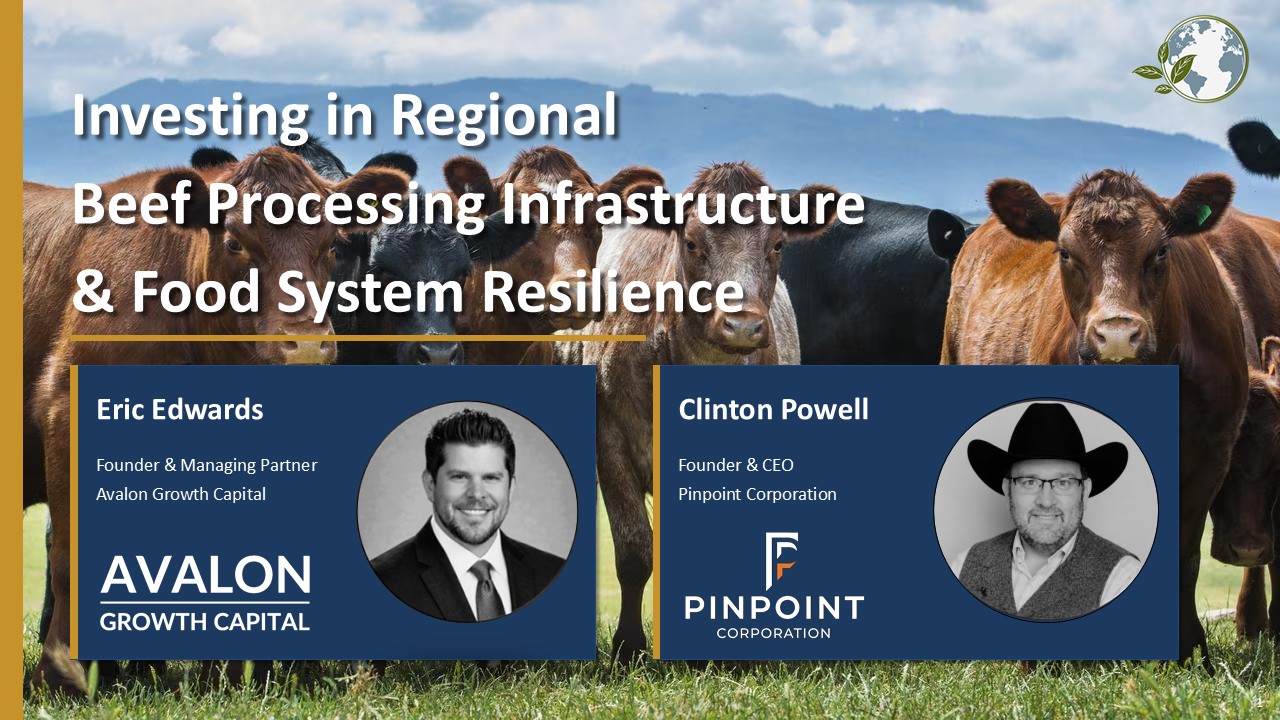
The session was led by Eric Edwards, Founder and Managing Partner of Avalon Growth Capital, and Clinton Powell, Founder and CEO of Pinpoint Corporation. Eric brings an uncommon vantage point to this type of investment conversation. As a former agricultural lender with credit approval authority, he has underwritten rural food infrastructure and production agriculture projects from inside the credit decision itself, a perspective that shapes how Avalon evaluates processing infrastructure opportunities and structures capital solutions around them.
Investing in Regional Beef Processing Infrastructure and Food System Resilience
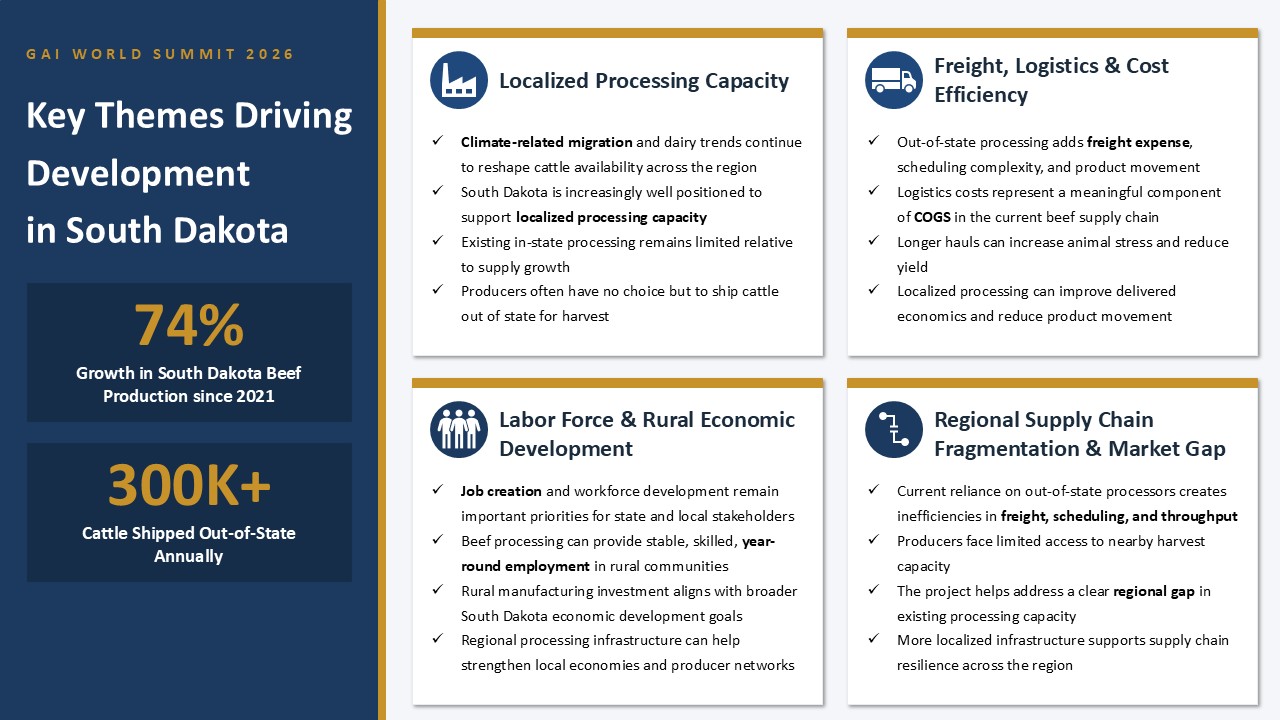
A central theme was the changing agricultural landscape in South Dakota and the broader region. Climate-related migration trends and the growing influence of dairy operations are reshaping cattle availability in South Dakota. These developments have helped position South Dakota as an increasingly attractive location for additional localized beef processing capacity, supported by reliable feedstock access and a strong regional production base.
The conversation also addressed the structural inefficiencies in the current regional beef supply chain. Eric's background underwriting agricultural credit brought an economic perspective to the problem and revealed that producers currently shipping cattle to out-of-state processors, the freight burden, scheduling friction, and throughput delays were direct cost center inefficiencies. A well-capitalized regional facility at the producer level is where the investment case ultimately has to hold. High Plains Premium Beef is a direct response to the clear processing gap in the market, and the two highlighted how the potential to reduce transportation inefficiencies directly improved overall delivered economics on the balance sheet.
Labor and workforce development emerged as a defining theme and food infrastructure investment was framed as a rural manufacturing opportunity aligned with workforce development priorities in South Dakota and at the federal level. The project creates jobs, strengthens local communities, and supports broader economic development goals.
The investment case for High Plains Premium Beef has several core drivers. Among them is the availability of high-quality, localized cattle supply, including support from producers and shareholders who have already demonstrated financial commitment. The conversation centered on the market opportunity that exists between large-scale commodity processors and premium-quality branded programs, where regional operators may be able to carve out differentiated positioning.
Another key point is the project’s location in Huron, South Dakota. Huron’s geographic position and the broader state-level emphasis on cattle, manufacturing, and rural development make it a compelling site for investment. Public support programs, including those aimed at meat processing and rural manufacturing expansion, are also reinforcing factors.
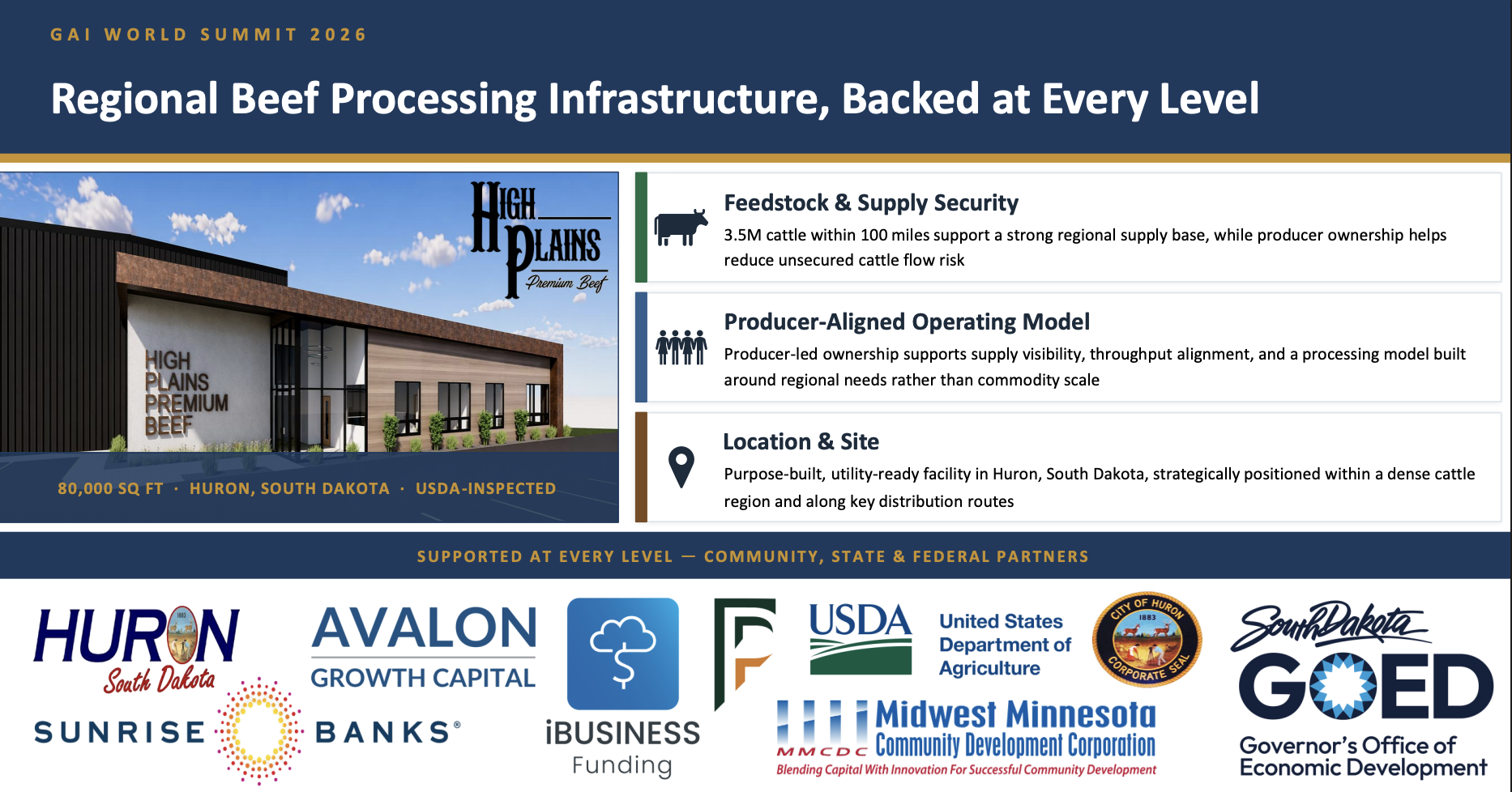
From an operational standpoint, High Plains Premium Beef is designed to be a producer-friendly, labor-focused, right-sized processing and value-added facility. The project places emphasis on efficiency, quality, workforce development, safety, and differentiated product strategy as central features of the planned operation.
The financing structure behind the project is another focal point, the compelling capital stack mix of public and private capital sources, including USDA Business & Industry financing, New Markets Tax Credits, South Dakota Economic Development programs, the City of Huron’s TIF program, and meat processing grants.
High Plains Premium Beef represents an excellent case for an impact-oriented investment opportunity that sits at the intersection of food security, rural job creation, and strategic infrastructure development. With support at both the state and federal levels, the project is a model for how regional food manufacturing investments can address supply chain resilience while advancing rural economic priorities.
Edwards has spent his career at the intersection of agricultural lending, rural project finance, and the USDA-backed capital structures qualifying projects like High Plains Premium Beef to be viable at scale. His participation in this session at Global AgInvesting is a reflection of both the project's institutional credibility and the growing recognition that regional food processing infrastructure represents a serious and underserved capital formation opportunity.
.jpg)
Recommended for you
Water Infrastructure: A Long-Term Capital Opportunity

Grid Investment Surge Creates New Opportunities Across the Utility Supply Chain
How GLP-1 Medications Are Reshaping the Food Supply Chain
We are driven by a passion to transform the world by empowering visionary entrepreneurs who dare to challenge and redefine today’s standards.

Partner with us
Let’s talk about the future growth of your business
Partner with usConnect with us to discover how our customized business consulting and investment banking advisory services can benefit your business.
.svg)